
When's The Best Time of Year to Replace Your Roof in Bloomington?
Fall and late spring are the best times to replace a roof in Bloomington. Learn how season affects cost, timeline, and shingle performance in Indiana.
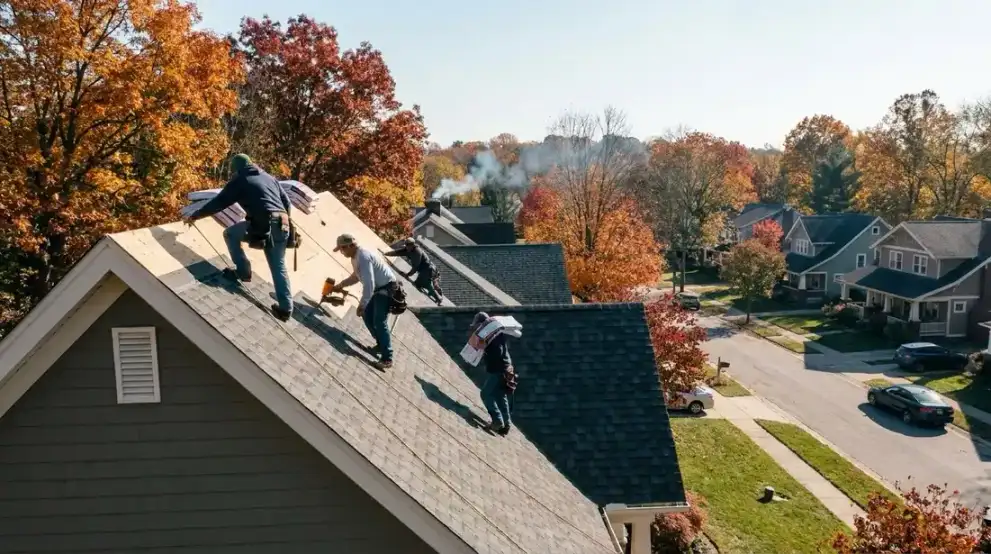
The best time of year to replace a roof in Bloomington is fall, with late spring as a strong second choice. Moderate temperatures between 40°F and 80°F let asphalt shingle adhesive strips seal properly and keep crews working at full pace. Urban Shield Roofing schedules residential roofing replacements in Bloomington year-round, but fall consistently delivers the best combination of weather and availability.
Summer storm season in Indiana just wrapped, and the damage it left behind is now visible on hundreds of Monroe County roofs. Waiting through winter to address it risks ice dam leaks and further shingle deterioration from freeze-thaw cycling. Fall leads on shingle adhesion and crew availability, and one scenario overrides the calendar entirely.
Fall: The Strongest Window for Bloomington Roof Replacements

September through mid-November gives Bloomington homeowners the best conditions for a roof replacement. Daytime temperatures hover between 45°F and 75°F, which is the ideal range for asphalt shingle adhesive to activate and bond. Rain frequency drops compared to spring, and daylight hours are long enough for crews to complete most residential roofs in one to two days.
Contractor schedules open up slightly after the summer rush, which means shorter lead times between signing an estimate and starting work. Homeowners who book a complete roof replacement in Bloomington in early September often have a new roof in place before the first freeze.
Spring: A Good Second Choice

Late April through May is the next best window. Temperatures climb into the 50s and 60s, shingle sealant activates reliably, and the work gets done before summer heat and storm season set in. The tradeoff is rain. Bloomington averages 4 to 5 inches of rainfall in both April and May, which can delay a scheduled tear-off by a day or two.
Spring is also the busiest booking season for roofers because winter damage becomes visible once the snow melts. Scheduling early, ideally in March for an April or May install, avoids the backlog. Understanding how long a roof replacement takes helps homeowners plan around the weather gaps.
Summer and Winter: What to Expect

Summer
June through August works for roof replacement, but heat and demand both peak. Crew comfort drops when temperatures pass 90°F, and asphalt shingles become pliable enough to scuff during installation. Afternoon thunderstorms can interrupt a multi-day job. Indiana summers also bring the highest contractor demand, which pushes lead times out and occasionally raises pricing.
Winter
Winter replacements are possible in Bloomington but carry more risk. Shingle adhesive strips need sustained warmth above 40°F to activate, and Monroe County regularly drops below freezing from December through February. Underlayment and ice-and-water shield perform normally in cold weather, but the shingle seal may not fully bond until spring. For emergency situations like active leaks or storm damage, winter installation beats waiting.
When You Shouldn't Wait for the Right Season

Timing matters, but an active leak or visible storm damage overrides seasonal preference. Water entering the home causes interior damage that compounds daily. Mold can begin forming within 48 hours of sustained moisture exposure, and damaged decking weakens the longer it stays wet.
If a storm has already compromised your roof, the cost to replace a roof in Bloomington stays roughly the same regardless of season. Urban Shield prioritizes emergency work and can typically begin within days of the initial inspection, even during off-peak months.
Frequently Asked Questions
Can you replace a roof in the rain?
A roof cannot be safely replaced during active rainfall because the deck must stay dry for underlayment and shingles to bond properly. Roofing crews monitor forecasts and will delay a scheduled tear-off if rain is expected within the work window. If rain arrives mid-job, the crew tarps the exposed sections and resumes once the deck dries, which typically adds a day to the timeline.
Is it cheaper to replace a roof in winter?
Roof replacement pricing in Bloomington does not drop significantly in winter because material costs stay consistent year-round. Some contractors offer modest discounts during slower months to keep crews working, but the savings are typically a few hundred dollars rather than thousands. The bigger advantage is shorter lead times since fewer homeowners schedule winter work.
How far in advance should I schedule a roof replacement?
Scheduling a roof replacement at least four to six weeks in advance gives the contractor time to order materials, pull permits, and coordinate the crew. Urban Shield Roofing can often move faster for straightforward jobs, but complex rooflines or specialty materials may extend the timeline. Booking in late summer for a fall install or in winter for a spring install helps secure the best seasonal windows.
Schedule Your Replacement This Fall

Fall gives Bloomington homeowners the best weather, the best shingle performance, and the shortest wait times for a roof replacement. Spring is a close second. Summer and winter both work when the situation demands it, but the conditions and scheduling challenges increase.
If your roof is showing its age or you're dealing with storm damage from this past season, call Urban Shield Roofing at (812) 606-3636 or schedule your free roofing estimate to lock in a fall installation date before the calendar fills.