
Asphalt Shingle Roof Lifespan: 5 Signs It's Time to Replace Your Roof
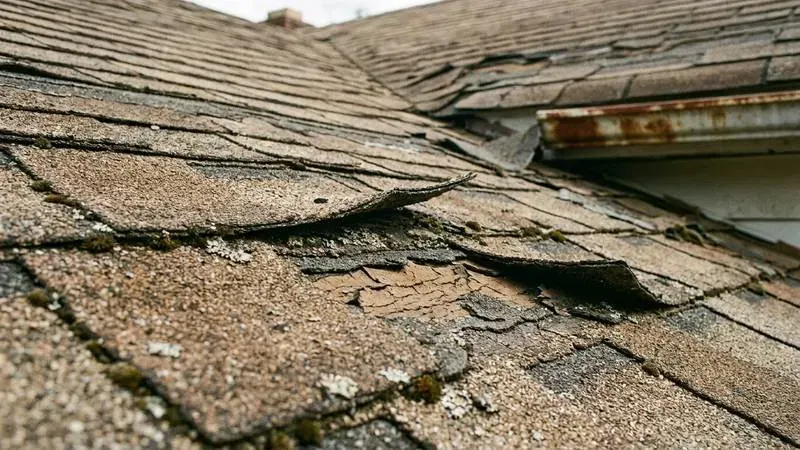
Asphalt shingle roofs typically last 15 to 30 years depending on the shingle type. Standard 3-tab shingles average 15 to 20 years, while architectural shingles typically reach 22 to 30 years with proper installation and ventilation. Urban Shield Roofing has replaced hundreds of aging asphalt shingle roofs across the Bloomington area and uses these five markers to judge when repair stops making sense.
Late spring is when most Monroe County homeowners notice the damage winter left behind. Freeze-thaw cycling loosens granules, ice dams lift edges, and wind strips weakened shingles entirely. If your roof survived another Indiana winter, now is the time to check for these signs.
Curling or Buckling Shingles

Shingles curl when moisture trapped beneath them causes the mat to expand unevenly. Buckling happens when the roof deck shifts or when shingles weren't given enough space to expand during installation. Either way, the shingle can no longer lie flat against the deck, and wind catches the raised edge. In Monroe County, where 40-plus freeze-thaw cycles happen every winter, curling accelerates once the granule layer starts thinning. A few curled shingles near a vent or edge can be repaired. If curling appears across an entire slope, replacement is more cost-effective than patching.
Bare Spots Where Granules Used to Be

Granules protect the asphalt layer from UV radiation. As they wear away, the exposed asphalt heats up faster, dries out, and cracks. Normal aging sheds granules gradually over 15 to 20 years. Hailstorms and heavy rain speed that up dramatically. Check your gutters after the next storm — a thick layer of granule sediment at the bottom means your shingles are losing their protective coating faster than expected. Once the dark asphalt mat shows through, the shingle has entered its final years regardless of its age. These signs point toward a new roof.
Cracked Shingles Across Multiple Sections

Thermal cycling cracks shingles from the inside out. Indiana's summers push roof surface temperatures above 150°F, and winter nights drop well below freezing. That repeated expansion and contraction makes the fiberglass mat brittle over time. Isolated cracks from impact or debris are repairable. Widespread cracking across two or more roof sections signals that the shingle material itself has reached the end of its useful life. No amount of patching extends a roof past this point — the underlying material won't hold a seal. These repair warning signs help you tell the difference.
Daylight Visible Through the Roof Boards

Go into your attic on a sunny day and look up. If light comes through the roof boards, water can follow the same path. Small gaps around vents or pipe boots are normal and fixable with flashing repairs. Gaps in the field of the roof — between deck boards or where sheathing has separated — mean the structure underneath your shingles is compromised. This usually shows up in homes with original 1970s or 1980s plank decking that has dried out and separated over decades of Indiana humidity swings.
Your Roof Is 20 Years Old or Older

Age alone doesn't mean replacement is urgent, but it changes the math on repairs. A 22-year-old architectural shingle roof with one damaged section might justify a repair. That same roof with two or three problem areas is approaching the point where repair costs stack up to a meaningful percentage of a full residential roofing replacement. Atlas architectural shingles carry a 50-year manufacturer warranty, but real-world performance in Indiana's climate typically falls between 22 and 30 years. If your roof is past 20, every repair decision should include a replacement estimate for comparison.
Frequently Asked Questions
How long do 3-tab shingles last compared to architectural?
Standard 3-tab shingles typically last 15 to 20 years under normal conditions. Architectural shingles typically last 22 to 30 years because they use a thicker, multi-layer construction with better wind and impact resistance. In Indiana's climate, the gap widens further — 3-tab shingles are more vulnerable to wind uplift and granule loss from hail and freeze-thaw cycling.
Can I extend my roof's lifespan with maintenance?
Regular maintenance adds years. Keep gutters clear so water drains instead of backing up under shingles. Trim branches that scrape or drop debris. Fix damaged flashing at chimneys and vents before leaks start. Urban Shield Roofing recommends an annual inspection after winter to catch problems early, especially on roofs past the 15-year mark.
Does attic ventilation really affect how long shingles last?
Yes. Poor ventilation traps heat in the attic, baking shingles from below and accelerating granule loss and mat deterioration. An under-ventilated roof in Bloomington can lose three to five years of shingle life compared to a properly vented one. Balanced soffit-to-ridge airflow keeps attic temperatures closer to outside air and reduces moisture buildup that weakens decking.
Plan the Replacement Before Damage Spreads

Each of these five signs is manageable when caught early. Letting multiple problems overlap turns a straightforward replacement into a project that includes deck repairs, interior water damage, and higher costs. If your asphalt shingle roof is past 20 years or showing two or more of these warning signs, getting a professional assessment now gives you time to plan and budget rather than react to an emergency.
Contact Urban Shield Roofing at (812) 606-3636 for a free inspection and honest assessment of your roof's remaining life.